Postpartum
The Struggle: Part I — The Quiet Epidemic
In American healthcare, the most dangerous moment for a mother is often the weeks after she leaves the hospital. Why are we letting them fall through the cracks?

Ilana Shein, MD
The silence of three in the morning isn’t really silent. It’s a roaring quiet, filled with the phantom cries of an infant finally asleep and the thudding rhythm of your own anxious heart.
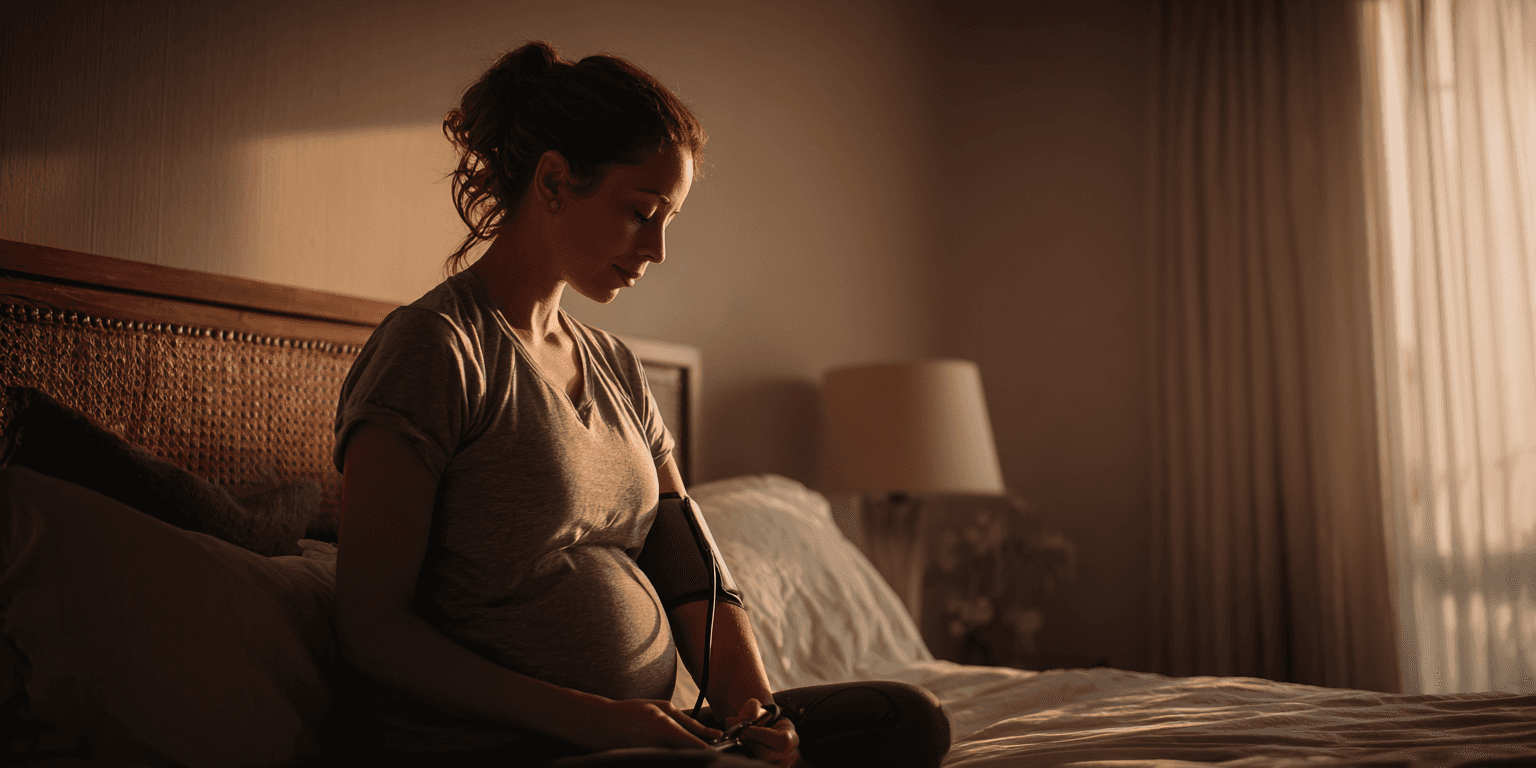
For Maya, three weeks postpartum, the silence was heavy with something else: a persistent, throbbing pressure right behind her eyes. Yesterday, her OB-GYN’s receptionist had dismissed it over the phone as "just hormones" and suggested she drink more water. Now, sitting on the edge of her bed in the weak light of a streetlamp, the sheets twisted around her ankles, Maya stared at a pile of unsorted laundry in the corner that felt insurmountable. She felt less like a person and more like a vessel that had been emptied out and left on the counter to dry.
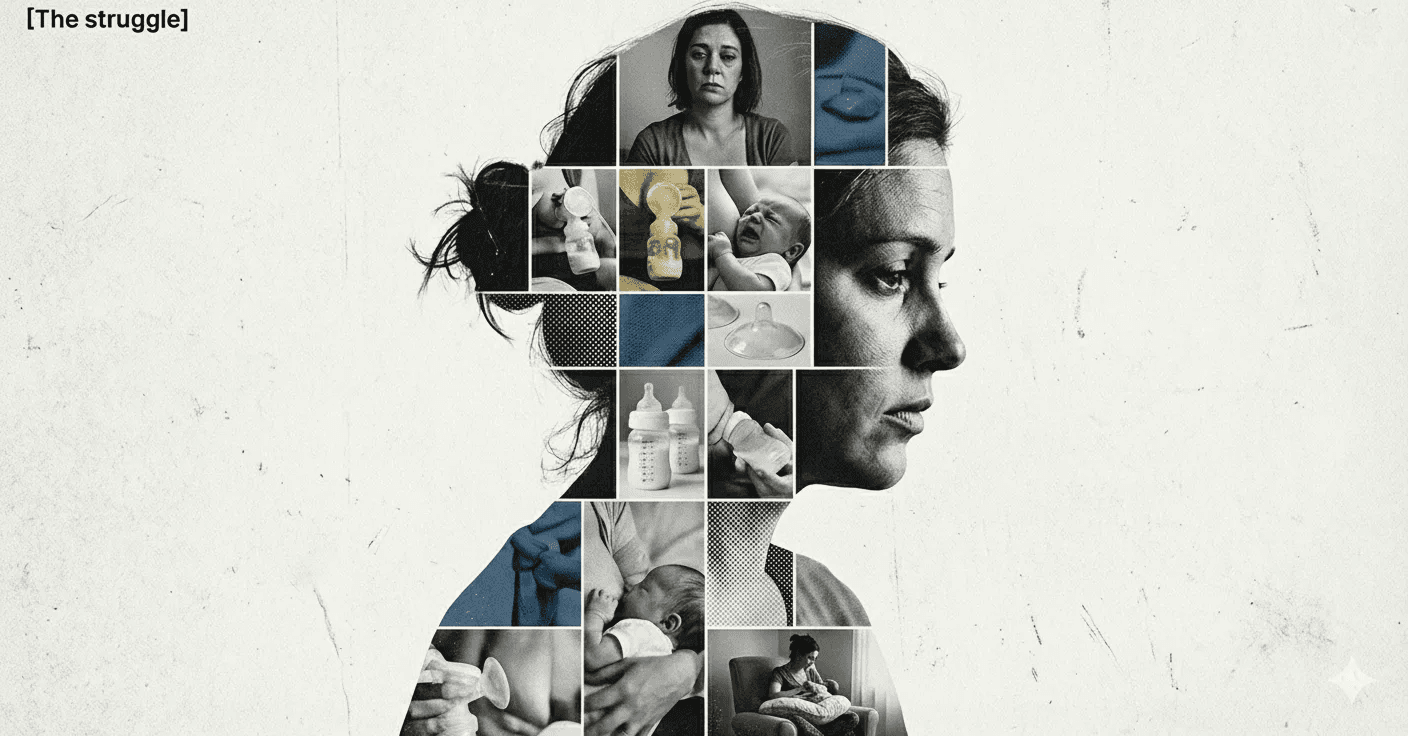
The accompanying portrait for this series captures this precise fragmentation. It is a geography of exhaustion—the messy bun, the thousand-yard stare, the cold cup of coffee, the overwhelming sense of a self broken into pieces by the relentless demands of sustaining new life.
We colloquially call this "the struggle"—a sort of wry, communal acknowledgment of sleepless nights, leaking breasts, and hormonal rollercoasters. We normalize the suffering as the admission price for motherhood. But in the United States, this normalization has become a dangerous shroud, hiding a reality that is medically, statistically, and tragically distinct from mere tiredness.
But in the United States, this normalization has become a dangerous shroud, hiding a reality that is medically, statistically, and tragically distinct from mere tiredness.
The struggle is the mortal pivot point. It is the space where preventable complications—preeclampsia, infection, hemorrhage, cardiomyopathy—are transmuted by systemic neglect into maternal morbidity and mortality.
The crisis in American maternal health isn't just that bodies fail; biology is inherently fraught. The crisis is that the systems built to monitor those bodies are failing first, and they are failing unevenly. The United States has the highest maternal mortality rate among developed nations, a statistic that becomes vastly grim when adjusted for race; Black women are three times more likely to die from pregnancy-related causes than white women.
“We have normalized postpartum suffering to such a degree that we can no longer distinguish between common discomfort and impending catastrophe. When a mother says something is wrong, the default medical response is too often reassurance rather than investigation.”
(Dr. Evelyn Reed, Perinatal Epidemiologist)
The issue is structural, embedded in the very design of our care infrastructure. The "fourth trimester" is a medical no-man’s-land. Once the baby is delivered, the medical apparatus pivots sharply. The infant has a pediatrician and a schedule of wellness checks. The mother is frequently handed a peri-bottle and told to return in six weeks—an eternity during which blood pressure can spike and clots can form unobserved.
"You feel incredibly alone," says Sarah, a mother from Ohio who suffered severe postpartum hemorrhaging that was initially attributed to heavy periods. "You are holding this fragile new life, terrified you're going to break it, meanwhile you feel like you are actively dying, and everyone just keeps telling you, 'You’re doing great, Mama.' It’s a form of gaslighting."
"You are holding this fragile new life, terrified you're going to break it, meanwhile you feel like you are actively dying, and everyone just keeps telling you, 'You’re doing great, Mama.' It’s a form of gaslighting."
The fragmentation seen in our artwork isn't just psychological; it is the reality of a healthcare system that treats the uterus as separate from the heart, and the mother as separate from the child once the umbilical cord is cut.
Maya didn't know the statistics that night in the dark, gripping the edge of her mattress. She just knew her head felt like it was splitting. When she finally woke her partner, asking to go to the emergency room, she felt a surge of guilt for causing a fuss. That guilt—that hesitation to advocate for one's own survival because you've been conditioned to believe you are being hysterical—is the insidious soundtrack of this epidemic.
This introductory essay is merely the first shutter-click in a larger, year-long investigative series. Over the coming months, "The Struggle" will move beyond the silhouette to examine the specific systemic gears that are grinding mothers down.
Our upcoming dispatches will investigate the following pillars of the maternal crisis:
The Maternity Care Deserts: A deep dive into the 35% of U.S. counties where obstetric care has vanished, forcing women into hours-long commutes for basic prenatal screenings.
The Data Gap: How the recent pause in federal monitoring programs like PRAMS has left us flying blind in 2026, just as mortality rates begin to shift in unpredictable directions.
Mental Health as a Mortal Threat: We often treat postpartum depression as a secondary "wellness" issue. We will examine the clinical data showing that mental health conditions—including suicide and overdose—are now a leading cause of pregnancy-related death.
The Racial Pivot: Why, despite a general post-pandemic decline in national mortality rates, the death rate for Black mothers continues to rise, widening a gap that policy alone has yet to bridge.
The 2026 Policy Frontline: An inside look at the bipartisan legislative battles over the Preventing Maternal Deaths Reauthorization Act and the push to mandate 12-month Medicaid coverage in every state.
The fragmented grid within our portrait is a promise: we will look at every piece of the collage—the clinical, the political, and the deeply personal—until the picture of maternal health in America is finally, undeniably clear.
How designers estimate the impact of UX?
The Struggle: Part I — The Quiet Epidemic
The Struggle: Part I — The Quiet Epidemic
In American healthcare, the most dangerous moment for a mother is often the weeks after she leaves the hospital. Why are we letting them fall through the cracks?
In American healthcare, the most dangerous moment for a mother is often the weeks after she leaves the hospital. Why are we letting them fall through the cracks?
Ilana Shein, MD
Published in Fintech
Postpartum
Image credit by Yum Yum
The silence of three in the morning isn’t really silent. It’s a roaring quiet, filled with the phantom cries of an infant finally asleep and the thudding rhythm of your own anxious heart.
For Maya, three weeks postpartum, the silence was heavy with something else: a persistent, throbbing pressure right behind her eyes. Yesterday, her OB-GYN’s receptionist had dismissed it over the phone as "just hormones" and suggested she drink more water. Now, sitting on the edge of her bed in the weak light of a streetlamp, the sheets twisted around her ankles, Maya stared at a pile of unsorted laundry in the corner that felt insurmountable. She felt less like a person and more like a vessel that had been emptied out and left on the counter to dry.
The accompanying portrait for this series captures this precise fragmentation. It is a geography of exhaustion—the messy bun, the thousand-yard stare, the cold cup of coffee, the overwhelming sense of a self broken into pieces by the relentless demands of sustaining new life.
We colloquially call this "the struggle"—a sort of wry, communal acknowledgment of sleepless nights, leaking breasts, and hormonal rollercoasters. We normalize the suffering as the admission price for motherhood. But in the United States, this normalization has become a dangerous shroud, hiding a reality that is medically, statistically, and tragically distinct from mere tiredness.
But in the United States, this normalization has become a dangerous shroud, hiding a reality that is medically, statistically, and tragically distinct from mere tiredness.
The struggle is the mortal pivot point. It is the space where preventable complications—preeclampsia, infection, hemorrhage, cardiomyopathy—are transmuted by systemic neglect into maternal morbidity and mortality.
The crisis in American maternal health isn't just that bodies fail; biology is inherently fraught. The crisis is that the systems built to monitor those bodies are failing first, and they are failing unevenly. The United States has the highest maternal mortality rate among developed nations, a statistic that becomes vastly grim when adjusted for race; Black women are three times more likely to die from pregnancy-related causes than white women.
“We have normalized postpartum suffering to such a degree that we can no longer distinguish between common discomfort and impending catastrophe. When a mother says something is wrong, the default medical response is too often reassurance rather than investigation.”
(Dr. Evelyn Reed, Perinatal Epidemiologist)
The issue is structural, embedded in the very design of our care infrastructure. The "fourth trimester" is a medical no-man’s-land. Once the baby is delivered, the medical apparatus pivots sharply. The infant has a pediatrician and a schedule of wellness checks. The mother is frequently handed a peri-bottle and told to return in six weeks—an eternity during which blood pressure can spike and clots can form unobserved.
"You feel incredibly alone," says Sarah, a mother from Ohio who suffered severe postpartum hemorrhaging that was initially attributed to heavy periods. "You are holding this fragile new life, terrified you're going to break it, meanwhile you feel like you are actively dying, and everyone just keeps telling you, 'You’re doing great, Mama.' It’s a form of gaslighting."
"You are holding this fragile new life, terrified you're going to break it, meanwhile you feel like you are actively dying, and everyone just keeps telling you, 'You’re doing great, Mama.' It’s a form of gaslighting."
The fragmentation seen in our artwork isn't just psychological; it is the reality of a healthcare system that treats the uterus as separate from the heart, and the mother as separate from the child once the umbilical cord is cut.
Maya didn't know the statistics that night in the dark, gripping the edge of her mattress. She just knew her head felt like it was splitting. When she finally woke her partner, asking to go to the emergency room, she felt a surge of guilt for causing a fuss. That guilt—that hesitation to advocate for one's own survival because you've been conditioned to believe you are being hysterical—is the insidious soundtrack of this epidemic.
This introductory essay is merely the first shutter-click in a larger, year-long investigative series. Over the coming months, "The Struggle" will move beyond the silhouette to examine the specific systemic gears that are grinding mothers down.
Our upcoming dispatches will investigate the following pillars of the maternal crisis:
The Maternity Care Deserts: A deep dive into the 35% of U.S. counties where obstetric care has vanished, forcing women into hours-long commutes for basic prenatal screenings.
The Data Gap: How the recent pause in federal monitoring programs like PRAMS has left us flying blind in 2026, just as mortality rates begin to shift in unpredictable directions.
Mental Health as a Mortal Threat: We often treat postpartum depression as a secondary "wellness" issue. We will examine the clinical data showing that mental health conditions—including suicide and overdose—are now a leading cause of pregnancy-related death.
The Racial Pivot: Why, despite a general post-pandemic decline in national mortality rates, the death rate for Black mothers continues to rise, widening a gap that policy alone has yet to bridge.
The 2026 Policy Frontline: An inside look at the bipartisan legislative battles over the Preventing Maternal Deaths Reauthorization Act and the push to mandate 12-month Medicaid coverage in every state.
The fragmented grid within our portrait is a promise: we will look at every piece of the collage—the clinical, the political, and the deeply personal—until the picture of maternal health in America is finally, undeniably clear.

Let’s talk about your members.
Let’s talk about your members.
A 30-minute capabilities briefing walks through the care model, how a partnership operates in practice, and a population-specific impact estimate built on your gap data.